This is default featured slide 1 title

Go to Blogger edit html and find these sentences.Now replace these sentences with your own descriptions.This theme is Bloggerized by Lasantha Bandara - Premiumbloggertemplates.com.

This is default featured slide 2 title

Go to Blogger edit html and find these sentences.Now replace these sentences with your own descriptions.This theme is Bloggerized by Lasantha Bandara - Premiumbloggertemplates.com.

This is default featured slide 3 title

Go to Blogger edit html and find these sentences.Now replace these sentences with your own descriptions.This theme is Bloggerized by Lasantha Bandara - Premiumbloggertemplates.com.

This is default featured slide 4 title

Go to Blogger edit html and find these sentences.Now replace these sentences with your own descriptions.This theme is Bloggerized by Lasantha Bandara - Premiumbloggertemplates.com.

This is default featured slide 5 title

Go to Blogger edit html and find these sentences.Now replace these sentences with your own descriptions.This theme is Bloggerized by Lasantha Bandara - Premiumbloggertemplates.com.

Tuesday, September 10, 2013

WHAT IS TASK MANAGER, APPLICATION, SERVICES, PROCESSES AND HOW TO KILL UNRESPONSIVE TASK


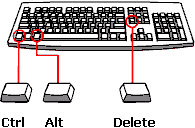
Whenever our beloved PC freezes, hangs or become unresponsive, the first thing which all of us do is pressCTRL+ALT+DELETE and selects a Task Manager option from the screen. I never met a guy who doesn't know about the Task Manager option in Windows. Still, if you have never heard about Task Manager, it's a utility in Windows which you can use to quickly recover your PC from unresponsive conditions. 
 
But that's not the only thing which you can do with the Task Manager utility, it has many more advanced features in it which we will discuss step by step.

Note: Task Manager has tons of options and it's difficult to explain each and everything in one article. In this article we will talk about some basics and then in the future articles we will see some advance options of it.

What are Applications, Processes And Services

Before going into details, it's necessary to understand the basic terminologies first to avoid the confusion.

1. Applications -- It's a program / software which you work on. (e.g. Word, Excel, Chrome, Internet Explorer etc.)

2. Services -- While you are working on Windows, browsing Internet, Printing Documents etc., there are many things which are running in the background making it possible for you to perform those tasks easily on your Computer. Those background things are called Windows Services. (For more detail info regarding services, Read : What Are Windows Services)

3. Processes -- Each application you open in Windows create one or many processes. These processes run in the background and helps the application to run properly in Windows. As soon as you exit the application / software, all of its related processes also get closed. But It's not necessary, for e.g. an antivirus software or a backup program starts automatically when you turn on a PC and its processes automatically run in the background without even opening the software each time. These processes (which starts automatically) act more like a service.

Processes and Services both run in the background, but have different meaning and purpose. To keep things simple, just keep this thing in mind that Services helps Processes to achieve the work which an Application is trying to do.

Why To Use Task Manager?

When you log in to Windows, there are many programs which starts at the startup and many services which runs in the background without your knowledge. Each application / software you open in Windows also creates one or many processes (tasks) in the background. Every PC has some limitation, doesn't matter how much RAM you have or how fast your Processor really is, you simply cannot run tons of software / applications at a time on it.

At the beginning you will not face any trouble using your PC, but after using Windows for some time (for many hours), you may feel some lag or slowness (that depends how many softwares you are concurrently working on). This may happen because all the services /  processes which are running in the background become insupportable by your PC's hardware. When any particular windows service or process from a software needs more resources from your PC and your Windows don't provide it because of any reason, that may cause Unresponsiveness / Hanging / Freezing Issue.

Note: PC can become unresponsive because of many reasons, but most of the time it's because of Windows Services / Application Processes. These problems can also occur because of Bad Hard Disk, read : Identify Problems Related To Hard Disks Health.

While working on Windows, if you feel any slowness, unresponsiveness, freezing etc. problem, then the quickest thing is to use the Task Manager utility. Using Task Manager, most of the time you can resolve application conflicts and software freezing issues.

 
 
It's a first place which you should visit immediately to take a look at the Running Softwares, Processes and Services. You can also see how much busier your Processor and RAM really is. Beside all these, there are tons of other advance things which you can perform at Task Manager in order to quickly heal your PC from all the said problems.

Task Manager Basics -- Overview

Now let me explain you the basics of the Task Manager (more like an overview of it), which will help us to understand the advance features of it which will be discussed in the future articles.

How To Open Task Manager

1. Traditional method to open Task Manager is by pressing CTRL+ALT+DEL and then selecting the Task Manager option from the Screen.


2. The second method, which is quickest to achieve the same task is with the help of a keyboard shortcut. Press CTRL+SHIFT+ESC key and it will immediately bring the Task Manager window on the screen.

3. The third method which is not known to many people is, Right Click the Taskbar and select Start Task Manager option from the context menu.

 

It's up to you to use the method which is more easy to you to open the Task Manager utility in Windows.

The Applications Tab

At the Applications Tab in the Task Manger, it will show you the list of those applications / softwares which are currently open in Windows.
 

This is the window from where you will kill those applications which are unresponsive and destabilizing the Windows. Most of the time it happens with our Web Browsers especially when we open multiple tabs on it, it suddenly becomes slow or unresponsive. In that case, quickly open the Task manager and look for the task which is showing as Not Responding. Select that task and then click End Task button.

 

If it shows any warning message, simply click End Now button to close that application forcefully.
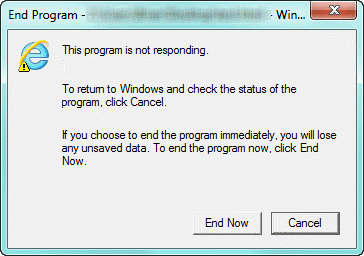
 

Note: Whenever a software freezes / hangs, just leave your mouse and keyboard immediately for the next 5 minutes and don't do anything. If your computer doesn't respond and the application doesn't become stable / normal by itself, then open the Task Manager and End that application by following the method told above.

Last Words

In this article I tried my best to explain you some complicated terminologies which often confuses to many advanced users as well and also explained how easily we can terminate any unresponsive task at the Applications Tab of the Task Manager. In the next article we will discuss other options of the Task Manager and will try to dig into more advance features of it.

Thursday, August 22, 2013

Gunners news: Fenerbahce 0-3 Arsenal

Gunners put one foot in the group stages

Goals from Kieran Gibbs, Aaron Ramsey and Olivier Giroud have put Arsene Wenger's men in a commanding position in the Champions League play-off ahead of next week's second leg

CL - Arsenal vs Fenerbahce
Getty Images
Arsenal ran out comfortable 3-0 winners over Fenerbahce in Istanbul on Wednesday night to put one foot in the group stages of the Champions League.

Second-half goals from Kieran Gibbs, Aaron Ramsey and a penalty from Olivier Giroud made sure of the win, with the Gunners now firmly in the driving seat ahead of next week's second leg at the Emirates Stadium.

Arsene Wenger was forced into one change from the opening day of the Premier League season with injury to Alex Oxlade-Chamberlain ruling him out of the trip to Turkey.

Santi Cazorla replaced the England international with Lukas Podolski having to settle for a place on the bench.

Fenerbahce gave starts to new signings Bruno Alves and Michal Kadlec, while another new arrival Emmanuel Emenike was named as a substitute.

Having dominated the opening exchanges, Arsenal tested goalkeeper Volkan Demirel for the first time after 19 minutes.

Cazorla created the first opportunity for Walcott, his through-ball nearly finding the forward, but Demirel slid in well to intercept.

The loose ball fell to Tomas Rosicky and he delivered a perfect cross for Giroud but the striker’s header was just wide of goal.

Fenerbahce were struggling to get into the game and failed to test Wojciech Szczesny in the opening half.

Wenger's early season injury problems continued just after the half hour when Laurent Koscielny was forced off with a head injury.

The French defender clashed with Pierre Webo and had to be replaced by Carl Jenkinson.

The hosts began the second half at a much higher tempo but fell behind six minutes in as Gibbs scored a crucial away goal.

Just after the hour, Arsenal doubled their lead thanks to Ramsey.

He received a pass from Jack Wilshere 35 yards from goal and moved at pace towards the Fenerbahce defence. As he reached the penalty area, Ramsey fired a low shot into the bottom corner, although Demirel should have done better.

The victory was secured with 14 minutes to play as Kadlec brought down Walcott inside the penalty area. Giroud made no mistake from the spot, sending Demirel the wrong way to complete a perfect night for Arsenal.

Wednesday, August 21, 2013

10 Most Poisonous Animals in the World

It is really hard to tell which animal is the most poisonous in the world. The one that has the most toxic chemicals? The one that kills the biggest amount of people a year? Or maybe the one with the biggest amount of poison? First of all, I have to admit that the title is a bit incorrect, because there is a difference between poisonous and venomous animals. A poisonous animal carries harmful chemicals called toxins primarily used for self defense. Therefore venomous animals deliver their toxins by stinging, stabbing, or biting. So poisonous animals are passive killers, while venomous animals are active killers. Nevertheless, theory aside, they are all really dangerous. So look really closely at each photo, cause next time you meet them can be the last thing you ever see.


# 10 Puffer Fish


Puffer Fish are the second most poisonous vertebrate on earth (the first one is golden dart Frog). The meat of some species is a delicacy in both Japan (as fugu) and Korea (as bok-uh) but the problem is that the skin and certain organs of many puffer fish are very poisonous to humans. This puffy fish produce rapid and violent death..Puffer抯 poisoning causes deadening of the tongue and lips, dizziness, vomiting, rapid heart rate, difficulty breathing, and muscle paralysis. Victims die from suffocation as diaphragm muscles are paralyzed. Most of the victims die after four to 24 hours. There is no known antidote, Most deaths from fugu happen when untrained people catch and prepare the fish. Statistics show that there were 20 to 44 incidents of fugu poisoning per year between 1996 and 2006 in all of Japan and up to six incidents per year led to death. Since Fugu抯 poison can cause near instantaneous death, only licensed chefs are allowed to prepare it.
Source


# 9 Poison Dart Frog


If you ever happen to be running through the rain forests somewhere in Central or South America, do not ever pick up beautiful and colorful frogs ?it can be the Poison Dart Frog. This frog is probably the most poisonous animal on earth.The 2 inch long (5cm) golden poison dart frog has enough venom to kill 10 adult humans or 20,000 mice. Only 2 micrograms of this lethal toxin (the amount that fits on the head of a pin) is capable of killing a human or other large mammal. They are called 揹art frogs?because indigenous Amerindians?use of their toxic secretions to poison the tips of their blow-darts. Poison dart frogs keep their poison in their skins and will sicken or kill anybody who touches or eats it.


# 8 Inland Taipan


The prize for 揟he World抯 Most Venomous Snake?goes to the Inland Taipan of Australia. Just a single bite from this snake contains enough venom to kill 100 human adults or an army of 250,000 mice. Its venom is at least 200 ?400 times more toxic than a common cobra. The Inland Taiwan抯extremely neurotoxic venom can kill an adult human in as little as 45 minutes. Fortunately this snake is very shy and there have been no documented human fatalities (all known bites were treated with antivenin).


7 The Brazilian wandering spider


The Brazilian Wandering Spider (Phoneutria) or banana spider appears in the Guinness Book of World Records 2007 for the most venomous spider and is the spider responsible for most human deaths. This spider is believed to have the most potent neurotoxic venom of any living spider. Only 0.006mg (0.00000021oz) is sufficient to kill a mouse. They are also so dangerous because of their wandering nature. They often hide during daytime in highly populated areas inside houses, clothes, boots, and cars. Its venomous bite causes not only intense pain, the venom of the spider can also cause priapism ?uncomfortable erections lasting for many hours that lead to impotence.


# 6 Stonefish


Maybe Stonefish would never win a beauty contest, but it would definitely win the top prize for being 揟he World Most Venomous Fish? Its venom causes such a severe pain that the victims of its sting want the affected limb to be amputated. It is described as the worst pain known to man. It is accompanied with possible shock, paralysis, and tissue death. If not given medical attention within a couple of hours It can be fatal to humans. Stonefish stores its toxins in gruesome-looking spines that are designed to hurt would-be predators. Stonefish mostly live above the tropic of Capricorn, often found in the shallow tropical marine waters of the Pacific and Indian oceans, ranging from the Red Sea to the Queensland Great Barrier Reef.


# 5 Death Stalker Scorpion


Contrarily to the popular belief most of the scorpions are relatively harmless to humans as stings produce only local effects (pain, numbness or swelling). However, the Death Starker Scorpion is highly dangerous species because its venom is a powerful cocktail of neurotoxins which causes an intense and unbearable pain, then fever, followed by coma, convulsions, paralysis and death. Fortunately, while a sting from this scorpion is extremely painful, it would be unlikely to kill a healthy, adult human. Young children, the old, or infirm (with a heart condition) are at the biggest risk. Death stalker scorpions are spread in North Africa and Middle East .


# 4 Blue-Ringed Octopus


The Blue-Ringed Octopus is very small, only the size of a golf ball, but its venom is so powerful that can kill a human. Actually it carries enough poison to kill 26 adult humans within minutes, and there is no antidote. They are currently recognized as one of the world抯 most venomous animals. Its painless bite may seem harmless, but the deadly neurotoxins begin working immediately resulting in muscular weakness, numbness, followed by a cessation and breathing and ultimately death. They can be found in tide pools in the Pacific Ocean, from Japan to Australia .


# 3 Marbled Cone Snail


This little beautiful looking Marbled Cone snail can be as deadly as any other animal on this list. One drop of its venom is so powerful that it can kill more than 20 humans. If you ever happen to be in warm salt water environment (where these snails are often found) and see it, don抰 even think of picking it up. Of course, the true purpose of its venom is to catch its prey. Symptoms of a cone snail sting can start immediately or can be delayed in onset for days. It results in intense pain, swelling, numbness and tingling. Severe cases involve muscle paralysis, vision changes and breathing failure. There is no antivenom. However, only about 30 human deaths have been recorded from cone snail envenomation.


# 2 King Cobra


The King Cobra (Ophiophagus hannah) is the world抯 longest venomous snake ?growing up to 5.6 m (18.5 ft) in length. Ophiophagus, literally means搒nake-eater?as it eats other snakes. One single bite of this deadly snake can easily kill a human. This snake is even capable of killing a full-grown Asian Elephant within 3 hours if the larger animal is bitten in a vulnerable area such as the trunk. It抯 venom is not as toxic as other venomous snakes, but King Cobra is capable of injecting 5 times more venom than black mamba and can result in mortality up to 5 times faster than that of the black mamba. It is quite widespread, ranging across South and South-east Asia , living in dense highland forests.


# 1 Box Jellyfish


The top prize for 揟he World Most Venomous Animal,?would go to the Box Jellyfish. It has caused at least 5,567 recorded deaths since 1954. Their venom is among the most deadly in the world. It抯 toxins attack the heart, nervous system, and skin cells. And the worst part of it is that jelly box venom is so overpoweringly painful, that human victims go in shock, drown or die of heart failure before even reaching shore. Survivors experience pain weeks after the contact with box jellies. You have virtually no chance to survive the venomous sting, unless treated immediately. After a sting, vinegar should be applied for a minimum of 30 seconds. Vinegar has acetic acid, which disables the box jelly抯 nematocysts that have not yet discharged into the bloodstream (though it will not alleviate the pain). Wearing panty hose while swimming is also a good prevention measure since it can prevent jellies from being able to harm your legs.Jelly box can be found in the waters around Asia and Australia.
__._,_.___
 

Tuesday, August 6, 2013

Selamat Hari Raya Aidilfitri

Monday, August 5, 2013

Least explored places on Earth: Top 10 ...

To get to any of the places on this list will be extremely difficult, even in the modern development of the technology will have to do quite a difficult journey. Are you ready to take on Mother Nature? We present you a selection of 10 least-studied places on Earth where nature is preserved in a primitive form, and all processes take their course, without human intervention.

least explored places


10. Greenland Ice Sheet.

First discovered by Eric the Red, the land is covered by 80% ice. It is believed that the ice sheet, which is 600 square miles in size, melt in about 2000 years at current rates, so you still have a few thousand years, to visit him. Admire the beauty of these places can be in an article about the Greenland ice canyons, or in other articles on LifeGlobe.


9. The northern mountains of Colombia.

Mountains of northern Colombia have been largely studied only by guerrilla fighters and criminals. Because of this, it is difficult to say exactly how much of the mountains was indeed observed and investigated. Most of the local indigenous tribes here are peaceful, and scientists are discovering new species of flora and fauna with each new expedition.

8. The Amazon rainforest.

While the Amazon rainforest is cut down and is actively being developed by man, there still remain places and tribes, untouched by modern civilization. While civilization was withheld dense bush and an abundance of venomous animals, bulldozers and industrial equipment not yet got to the most remote corners, with an abundance of dangerous venomous animals and lush thickets. Unfortunately forests had existed for millions of years being destroyed at an alarming rate.

7. Papua New Guinea.

Papua New Guinea is not only the least researched area, but also the birthplace of the rare fauna and flora, and indigenous peoples, are the subject of curiosity of researchers and uchenyh.Zdes regularly discovered new species and culture, and many more remain undiscovered and unidentified.
unexplored places

6. Namibia.

With 2.1 million population, spread over 300,000 square miles is not surprising that Namibia is known as the least populated country in Africa. For animals such as cheetah and rhinoceros, Namibia - the perfect haven from poachers. This is due to the program for the protection of the natural world, prescribed in the constitution of the government of Namibia. It is the only country in the world that did so.

5. Tristan da Cunha.

Located near the mainland of South Africa, Tristan da Cunha - one of the most isolated islands in the world long just 7 miles. This island temperate climate, which makes it perfect to be a haven of giant elephant seals, shore birds and waterfowl. Tristan hotspot - a region with volcanic activity that forms the islands of the archipelago in the South Atlantic.


4. North-east Siberia (and the Kamchatka Peninsula).

Siberia - one of the parts of Russia, which covers about 70% of the country. However, living here is only 30% of its population. In fact, a large part of the population in Siberia, in one way or another connected with the production of oil.

3. Gankar Punsum.

Mountains Gankar Punsum located at the top of the list of the highest mountains in the world. On the borders of Tibet, China and Bhutan, these high altitudes understudied both because of deletion, and because of the political, social, and spiritual problems between the three countries.

2. Antarctica.
Antarctica is often noted as the world's largest ice pack, not easily accessible to scientists. Recent research in Antarctica became more intense as global warming have the opportunity to be here for longer periods.

1. Mariana Trench.

This region is the world unexplored. The deep sea basin, the Mariana Trench is located near Guam and the Mariana Islands. Only in 2011 the U.S. Navy mapped the Marianas Trench relief from hydrographic ship, using multi-beam echo sounder.


Thursday, August 1, 2013

Notable examples of animal camouflage

The reasons that animals are hiding, completely different. Some are trying to protect from attacks of predators, while others are hiding in order to quietly watch for prey. Let's take a look at the photos of hiding. However, most of the animals are hiding all the same for their own safety. At the genetic level, each generation adapts to the environment better. After all, nature is also changing. Some species are able to change their color, and the most striking example is the chameleon.However, do not forget about the seasonal change of color. Owl. Gecko. Ptarmigan. Frogs. Caterpillar. Marine nightjar.Snow Leopard. green grasshopper. Owl. Giraffe. Hedgehog.


Notable examples of animal camouflage


Notable examples of animal camouflage


Notable examples of animal camouflage


Notable examples of animal camouflage


Notable examples of animal camouflage


Notable examples of animal camouflage


Notable examples of animal camouflage


Notable examples of animal camouflage


Notable examples of animal camouflage


Notable examples of animal camouflage


Notable examples of animal camouflage


Notable examples of animal camouflage


Notable examples of animal camouflage


Notable examples of animal camouflage


Notable examples of animal camouflage


Notable examples of animal camouflage


Notable examples of animal camouflage


Notable examples of animal camouflage


Notable examples of animal camouflage